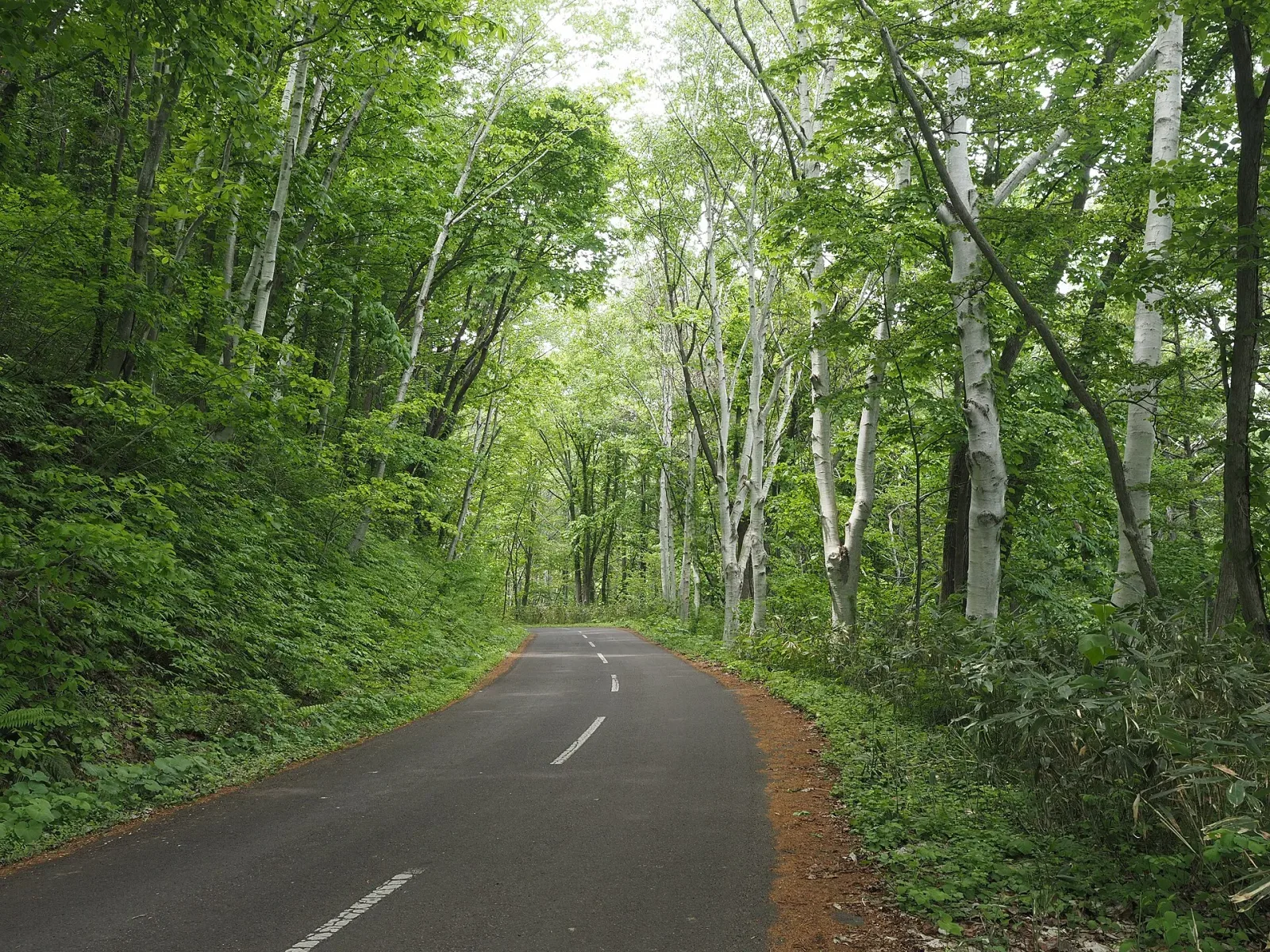
A quiet paved road passing through a green birch forest in Hokkaido

Route guide

Hokkaido Scenic Loop: Sapporo, Furano and Eastern Hokkaido

Hokkaido rewards a road trip because its major landscape regions are genuinely far apart. A Sapporo–Furano/Biei–eastern Hokkaido loop should be planned by overnight region rather than by a wish list of attractions: official Hokkaido travel-time tables show that some city-to-city drives alone take four to eight hours, so 10–14 days is a more credible first-time pace than trying to cross the island every day.

See the route snapshot
Sapporo / New Chitose Airport → Sapporo / New Chitose Airport10-14 daysModerate

Route snapshot

Decide from the constraints first

Core distance
About 1,400–1,700 km for a central-and-eastern Hokkaido loop depending on detours
Pure drive time
Official tourism travel-time tables show several major intercity legs of 3–8+ hours before sightseeing stops
Driving side
Left
Road character
Paved roads with seasonal mountain passes
Driving side
Left
Licence
Verify Japan's IDP / licence-translation requirements for your issuing jurisdiction
Distance
Major Hokkaido city pairs can require several hours even before stops
Route strategy
Use regional bases instead of changing accommodation every night
Winter
Treat as a separate high-constraint itinerary

Fit check

Is this route a good fit?

Use these tradeoffs before booking accommodation into a fixed sequence.

Good for

  • Travelers who want a self-drive way to connect Hokkaido's dispersed parks, farm landscapes, lakes and coastal regions.
  • Families comfortable with left-side driving and several multi-hour rural legs.
  • Travelers who can split the island into regions instead of attempting a complete perimeter loop in limited time.

Think twice if

  • You are planning a winter self-drive without snow/ice driving experience and a specific winter-risk plan.
  • Your itinerary changes hotel every night while also expecting long hikes or wildlife activities.
  • You do not have the correct licence / translation documents required to drive in Japan.

Trip length

Minimum, recommended, comfortable

Trip length is treated as a planning choice, not a single magic number.

Minimum

7 days

A selective loop that should focus on central Hokkaido plus one eastern region. Trying to include every major lake, peninsula and national park creates repeated long driving days.

Recommended

10–14 days

Enough time for Sapporo, Furano/Biei, Daisetsuzan or Tokachi, Akan/Mashu/Kushiro and Shiretoko/Abashiri with region-based overnights.

Comfortable

14–18 days

Best for slower hiking, wildlife, hot-spring stays and weather flexibility without making remote east-Hokkaido days depend on late arrivals.

Driving rhythm

Why map time is not trip time

  1. 01

    Use official intercity travel times as the floor, not the full day. Hokkaido Tourism Organization publishes examples where major city pairs require many hours of driving before any scenic stop is added.

  2. 02

    Build two-night regional bases when possible. Furano/Biei, Akan/Mashu/Kushiro and Shiretoko/Abashiri each work better as destination clusters than drive-through stops.

  3. 03

    Winter is a separate product. Snow, ice, visibility and daylight can change the risk profile dramatically, so this guide does not transpose the summer loop into a winter recommendation.

Vehicle choice

Match the vehicle to the road

Suitability is separate from rental-company permission. Verify the booking terms for your exact vehicle.

Good fit

Standard car

Suitable for the main paved summer/autumn itinerary. Choose vehicle size for passengers and luggage rather than assuming an SUV is required.

Useful, not required

Compact AWD

Can add confidence in poor shoulder-season conditions but does not replace correct tires, winter skill or road-condition checks.

Check restrictions

Campervan

Possible, but overnight rules, campground availability, vehicle size and rental terms need a separate plan.

Check restrictions

Winter rental

Treat winter driving as a distinct itinerary requiring winter-equipped vehicles, conservative routing and experience appropriate to snow and ice.

Core itinerary

A practical planning spine

This is a realistic backbone, not a requirement to complete every attraction listed.

Day 1

New Chitose / Sapporo → Sapporo

Local · Arrival and vehicle setup

Priorities

  • Confirm driving documents
  • Avoid a long rural leg after an international arrival

Overnight: Sapporo

Day 2

Sapporo → Furano / Biei

Approx. 120–160 km · Moderate transfer plus scenic stops

Priorities

  • Furano/Biei region
  • Keep photo stops selective
  • Finish before fatigue builds

Overnight: Furano or Biei

Day 3

Furano / Biei → Asahikawa / Daisetsuzan area

Approx. 60–120 km · Low-mileage mountain-region day

Priorities

  • One Daisetsuzan objective
  • Weather check for passes
  • Regional overnight

Overnight: Asahikawa or Daisetsuzan gateway

Day 4

Central Hokkaido → Akan / Kushiro area

Approx. 250–330 km · Long rural transfer

Priorities

  • Leave early
  • Fuel/meal planning
  • Choose one late-day objective only if energy remains

Overnight: Lake Akan or Kushiro

Day 5

Akan / Kushiro → Akan / Mashu / Kussharo area

Approx. 80–180 km · Lake-and-wetland regional day

Priorities

  • One wetland or lake objective
  • Avoid stacking every viewpoint
  • Confirm next-day eastern route

Overnight: Akan/Mashu area

Day 6

Eastern lakes → Shiretoko / Abashiri

Approx. 150–220 km · Scenic transition day

Priorities

  • Shiretoko or Abashiri region
  • Road to Heaven only as a safe legal stop
  • Respect seasonal pass access

Overnight: Utoro, Shari or Abashiri

Day 7

Shiretoko / Abashiri → Shiretoko / Abashiri

Local · Low-driving nature day

Priorities

  • One major nature activity
  • Wildlife / weather flexibility

Overnight: Eastern Hokkaido

Day 8–10

Eastern Hokkaido → Sapporo / New Chitose

Varies by chosen western return · Return split across one or more bases

Priorities

  • Do not force an 8-hour return after a full activity day
  • Use Obihiro or another regional base if needed

Overnight: Regional base then Sapporo

Season decision

Choose the tradeoff, not just the month

Conditions can change faster than an editorial page. Recheck official sources before departure.

June–September

Simplest first-time driving window

Longer daylight and broad scenic access suit a first loop, though fog, rain and mountain weather still require daily checks.

October

Autumn option with growing variability

Foliage can be excellent, but colder nights and early snow at elevation make conservative routing more important.

November–April

Winter-capable trip only

Snow and ice make this a fundamentally different driving task. Do not use a summer itinerary without winter-specific skill, equipment and current-condition checks.

FAQ

Questions that change the plan

How many days should I allow for a Hokkaido road trip?

Seven days can cover a focused region, but 10–14 days is more credible for a Sapporo–Furano/Biei–eastern Hokkaido loop because major intercity legs are long before scenic stops are added.

Do I need an SUV in Hokkaido?

Not for the main paved warm-season route. In winter the question changes from vehicle category to winter equipment, current conditions, driver skill and rental-company rules.

Can I drive in Japan with my home licence?

Requirements depend on where your licence was issued. Hokkaido's official tourism guidance lists accepted International Driving Permit or licence-plus-certified-translation routes; verify your exact jurisdiction before booking.

Is Hokkaido easy to drive in winter?

Do not treat it as an easy extension of a summer road trip. Snow, ice, visibility and short daylight create a different risk profile and require winter-specific planning and experience.

Compare the road type

Put this route back in context.

How much of each day should be driving, and how much should remain for trails, viewpoints, and wildlife-safe stops?

See the mountain parks comparison

Official sources

Verify the changing parts

Operational facts were reviewed on 2026-09-03. Road conditions, access, and winter requirements can change sooner.

Packing context

Categories that match the road

These are planning categories, not a shopping list. Choose equipment for the actual forecast, activity and vehicle plan.

Packable weather layer

Mountain, farm and coastal regions can feel very different within the same trip.

Compact day bag

Useful for scenic walks, lake stops and town visits while leaving larger luggage in the vehicle.

Sun / insect protection

Warm-season outdoor stops can involve long exposure in rural landscapes.

Phone power

Long intercity days increase dependence on navigation and translated travel information.

RoadTrip Guide is part of Horizon Outdoor. No product or affiliate link is required for this guidance to be useful.