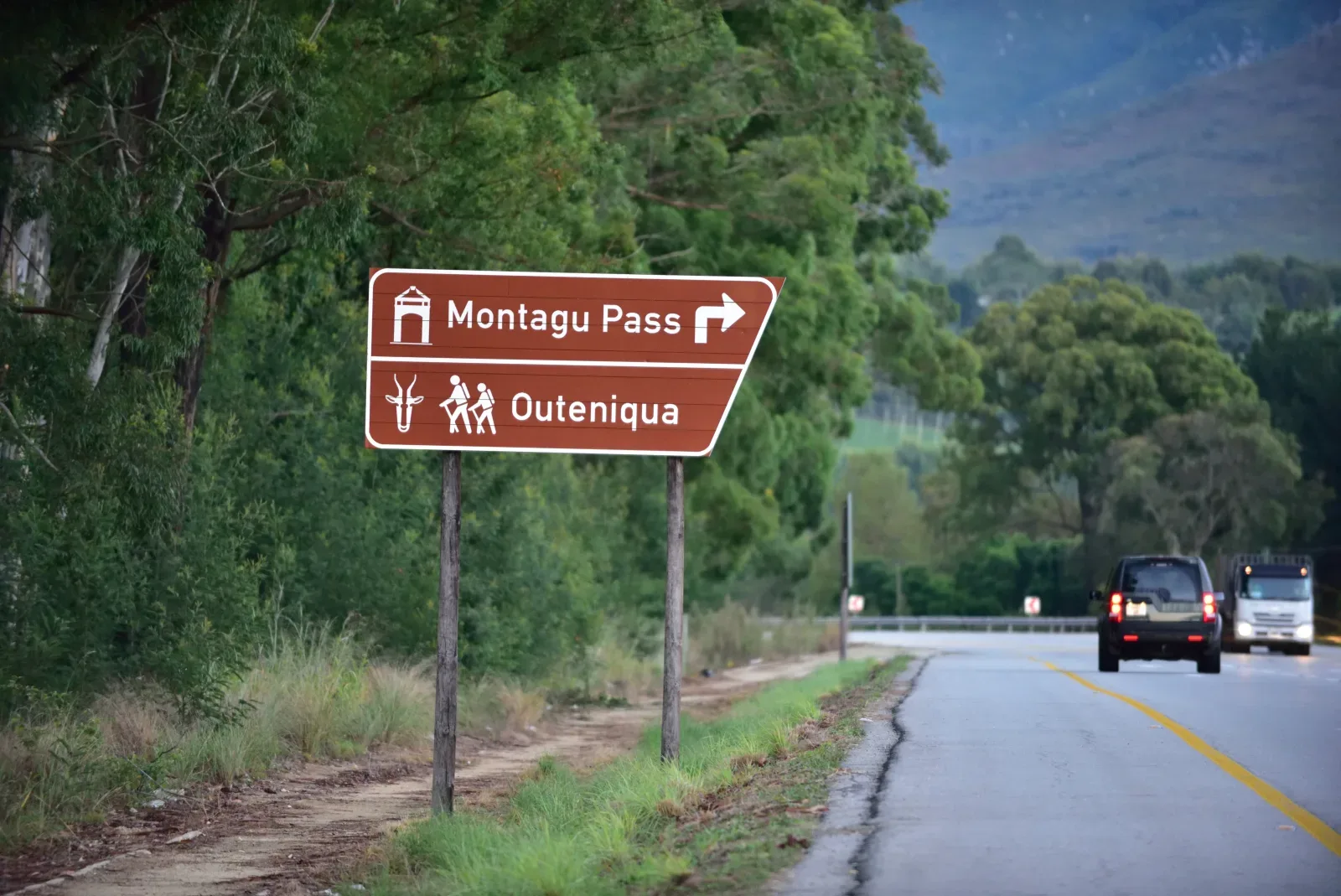
A road crossing green coastal hills along South Africa's Garden Route

Route guide

South Africa's Garden Route: Cape Town to Gqeberha

South Africa's Garden Route works best as a paced coastal-and-forest journey rather than a straight Cape Town-to-Gqeberha transfer. The classic Garden Route itself follows the N2 through the Western and Eastern Cape, while a broader 7–10 day trip can sensibly connect Cape Town, Mossel Bay, Wilderness, Knysna, Plettenberg Bay, Tsitsikamma and Gqeberha without turning every day into a long drive.

See the route snapshot
Cape Town → Gqeberha7-10 daysEasy

Route snapshot

Decide from the constraints first

Core distance
About 760 km for the broader Cape Town–Gqeberha trip; the core Garden Route is roughly 300 km between Mossel Bay and Storms River
Pure drive time
Treat intercity drive estimates as transfers only; the route's value comes from coastal towns, forests, parks and optional inland detours
Driving side
Left
Road character
Predominantly paved national and regional roads
Driving side
Left
Core road
N2 through the Garden Route corridor
Route style
Destination clusters connected by practical highway driving
Best practice
Plan longer transfers in daylight and recheck current road information

Fit check

Is this route a good fit?

Use these tradeoffs before booking accommodation into a fixed sequence.

Good for

  • First-time South Africa visitors who want a self-drive route with frequent towns and established tourism infrastructure.
  • Families and couples who prefer moderate daily mileage with beaches, forests, food and outdoor stops.
  • Travelers willing to keep driving to daylight hours and verify current route conditions before each longer leg.

Think twice if

  • You expect the entire Cape Town–Gqeberha journey to feel like one continuous ocean-edge scenic road; substantial sections are practical N2 driving between destination clusters.
  • You have only two or three days but want to include Cape Town plus multiple Garden Route parks and towns.
  • You are uncomfortable driving on the left or navigating unfamiliar urban approaches without advance route planning.

Trip length

Minimum, recommended, comfortable

Trip length is treated as a planning choice, not a single magic number.

Minimum

5 days

A selective point-to-point trip with limited time in Cape Town and the Garden Route towns. It leaves little room for longer walks, wildlife activities or a weather buffer.

Recommended

7–10 days

A stronger first-time rhythm for Cape Town, Mossel Bay/Wilderness, Knysna/Plettenberg Bay, Tsitsikamma and Gqeberha with one main activity most days.

Comfortable

10–14 days

Best for travelers adding Winelands, Oudtshoorn, multi-hour hikes, wildlife reserves or slower coastal stays without increasing daily driving pressure.

Driving rhythm

Why map time is not trip time

  1. 01

    Use the N2 as the spine, then budget stop time separately. South African Tourism describes the Garden Route around its coastal towns, forests and side-road attractions rather than as a drive-through highway experience.

  2. 02

    Keep the itinerary town-based: one overnight cluster around Wilderness/George, one around Knysna/Plettenberg Bay, and one around Tsitsikamma prevents repeated backtracking.

  3. 03

    For current incidents, construction or closures, verify the relevant road authority and local destination notices before departure instead of relying on a static guide.

Vehicle choice

Match the vehicle to the road

Suitability is separate from rental-company permission. Verify the booking terms for your exact vehicle.

Good fit

Standard car

The main N2 Garden Route corridor is paved. A normal rental car is sufficient for the core itinerary when current access is normal.

Useful, not required

SUV

Useful for luggage and comfort, but not necessary for the principal paved route. Do not interpret vehicle size as permission for optional gravel roads.

Check restrictions

Campervan / RV

Possible with dedicated campground planning; verify rental, campground and route restrictions for the exact vehicle before booking.

Check restrictions

EV

Plan charging around larger towns and confirmed current infrastructure rather than assuming every park or coastal stop has charging.

Core itinerary

A practical planning spine

This is a realistic backbone, not a requirement to complete every attraction listed.

Day 1

Cape Town → Cape Town

Local · Arrival / city day

Priorities

  • Keep the rental pickup low-pressure
  • Confirm N2 route and first overnight

Overnight: Cape Town

Day 2

Cape Town → Mossel Bay / Wilderness

Approx. 390–450 km depending on base · Longest transfer day

Priorities

  • Leave early in daylight
  • Choose one meaningful stop rather than many diversions
  • Arrive before evening

Overnight: Mossel Bay, George or Wilderness

Day 3

Wilderness → Knysna

Approx. 50–70 km plus local driving · Short road day with outdoor time

Priorities

  • Wilderness / lakes or forest objective
  • Knysna arrival
  • Keep afternoon flexible

Overnight: Knysna

Day 4

Knysna → Plettenberg Bay

Approx. 35–50 km plus local driving · Low-mileage coastal day

Priorities

  • One beach / nature objective
  • Plettenberg Bay area
  • Confirm Tsitsikamma plans

Overnight: Plettenberg Bay

Day 5

Plettenberg Bay → Storms River / Tsitsikamma

Approx. 65–90 km · Park-focused day

Priorities

  • Garden Route National Park / Tsitsikamma objective
  • Allow walking time
  • Avoid stacking a long onward transfer after a major activity

Overnight: Storms River or nearby

Day 6

Tsitsikamma → Gqeberha

Approx. 180–200 km · Moderate finish

Priorities

  • Complete the N2 leg in daylight
  • Leave airport / city margin
  • Return or continue rental only after checking booking terms

Overnight: Gqeberha

Day 7

Gqeberha → Departure / buffer

Local or varies · Buffer day

Priorities

  • Use only if an earlier day shifted
  • Avoid linking a long drive directly to a tight flight

Overnight: Depends on onward plan

Season decision

Choose the tradeoff, not just the month

Conditions can change faster than an editorial page. Recheck official sources before departure.

September–May

Broad first-time planning window

Warm-season conditions suit many coastal activities, but weather varies across the long route. Verify local park and road conditions close to travel.

June–August

Viable cooler-season trip

Shorter days and cooler/wetter periods increase the value of daylight driving and flexible outdoor plans.

Any season with active road disruption

Re-route around official restrictions

The N2 is transport infrastructure, not a guaranteed scenic corridor. Follow current authority instructions rather than trying to preserve the planned sequence.

FAQ

Questions that change the plan

How many days do I need for the Garden Route?

For the broader Cape Town-to-Gqeberha journey, five days is compressed and 7–10 days is a stronger first-time plan. The core Garden Route is shorter, but the value comes from time outside the car.

Is the Garden Route one continuous coastal road?

No. The N2 is the practical spine and some stretches are inland. The memorable coastal, forest and park experiences are concentrated around destination towns and side trips.

Do I need an SUV?

Not for the principal paved N2 itinerary. Choose a larger vehicle for passenger or luggage needs, not because the core Garden Route requires off-road capability.

Should I drive the whole route in one day?

That defeats the purpose of the trip. A same-day transfer can connect cities, but it leaves little room for Wilderness, Knysna, Plettenberg Bay or Tsitsikamma, which are the reason to choose this route.

Compare the road type

Put this route back in context.

Do you want easy ocean access, or are you comfortable sharing narrow roads with viewpoints, towns, and changing weather?

See the coastal comparison

Official sources

Verify the changing parts

Operational facts were reviewed on 2026-09-03. Road conditions, access, and winter requirements can change sooner.

Packing context

Categories that match the road

These are planning categories, not a shopping list. Choose equipment for the actual forecast, activity and vehicle plan.

Light rain layer

Forest, coast and changing local weather make one packable weather layer useful year-round.

Day bag

Useful for beaches, forest walks and park stops without unpacking the vehicle.

Water bottle

Keep water accessible on longer N2 transfers and outdoor stops.

Sun protection

Coastal and outdoor days can include prolonged sun exposure.

RoadTrip Guide is part of Horizon Outdoor. No product or affiliate link is required for this guidance to be useful.